How Jack Daniel’s beat Prohibition
Uncompromised grit still shapes Tennessee Whiskey today
#Barrelhouse 107 • 3:24 p.m. Aug. 12, 2025

Jack Daniel Distillery
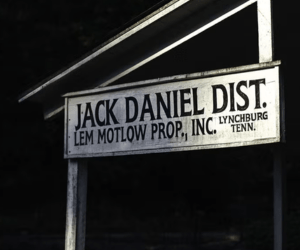
In 1907, poor health forced Jack Daniel to sign the distillery over to his nephews, Lem Motlow and Dick Daniel. Shortly afterward, Lem bought Dick’s half for $10,000, ending the Daniel family’s ownership of the distillery – though Daniel descendants still work there today.
Two years later, Tennessee enacted a statewide prohibition, prompting Lem to move operations to St. Louis. Prohibition in 1920 nearly shut the distillery down entirely, but Lem exploited a loophole that allowed whiskey production for medicinal purposes.
The business was already struggling under Prohibition when, in 1930, a fire caused significant damage to the distillery. To make ends meet, Lem sold horses and mules, and he bought the Lynchburg Hardware and General Store. These efforts helped, but Lem knew the distillery would not survive if Prohibition continued.
Determined to save it, he served in the Tennessee House of Representatives and State Senate, pushing for legislation to end Prohibition.
When Prohibition finally ended, Lem rushed to restart operations. Quality whiskey takes time, and he refused to compromise Uncle Jack’s standards, so he began selling 12-month-old whiskey under the “Lem Motlow” brand to generate revenue for rebuilding the dilapidated distillery.
From 1942 to 1946, the distillery halted whiskey bottling to produce 190-proof ethyl alcohol for the war effort during World War II. Lem died in 1947, leaving the distillery – and a large debt – to his four sons: Reagor, Robert, Daniel “Hap,” and Conner Motlow.
The Motlow brothers expanded production while preserving the quality their father and Uncle Jack had established. They lived by Mr. Jack’s motto: “Every day we make it, we’ll make it the best we can.”
Reagor, already general manager under his father, became president, and with Robert and Conner, gained fame as the “shirt-sleeve brothers” of Tennessee whiskey.
In 1956, they sold the company to Brown-Forman for $20 million – despite higher offers – because Brown-Forman agreed to three nonnegotiable conditions:
• They would never alter Jack’s recipe, quality, or methods.
• All Jack Daniel’s Tennessee Whiskey would be made in Lynchburg.
• They would not replace current employees with Brown-Forman staff.
Brown-Forman honored the agreement and continues to own the Jack Daniel Distillery. Today, the people of Lynchburg continue making whiskey the way Jack did – only now with modern equipment.

Steven Barbaro
Steven Barbaro is a Tennessee Squire. He runs the Barrelhouse 107 Facebook page. He can be reached at steven@mcobserver.news.