Brown-Forman merger talks say what?
Discussions reflect softer demand, tighter pressure, growing appetite for scale
10:45 a.m. March 27, 2026

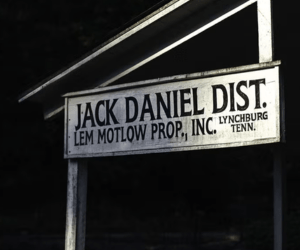
Jack Daniel Distillery
DUANE CROSS
MCO Publisher•Editor
For Lynchburg, these are not just merger talks. They are an early test of whether one of Moore County’s defining institutions now sees scale, not independence, as the safer bet in a tougher global drinks market.
Brown-Forman confirmed Thursday that it is in discussions with Pernod Ricard over a possible business combination “akin to a merger of equals,” while cautioning that no agreement has been reached and the talks may not result in a deal.
The caveat matters. The confirmation matters more.
When Scale Starts to Look Like Shelter
Public companies do not validate market chatter of this magnitude unless the conversation is real enough to command an answer. Brown-Forman’s acknowledgment signals that the idea is serious enough to address directly – and important enough to force a larger question: What would it mean if the company behind Jack Daniel’s decided the way forward is not to stand alone, but to pair up with one of the world’s biggest spirits groups?
The strategic logic is clear. The market is the problem.
A More Dangerous Challenger Takes Shape
Pernod Ricard is the bigger and broader global spirits company. Brown-Forman is smaller, but it punches far above its weight because Jack Daniel’s is one of the few truly global American whiskey franchises. Put them together, and the result is not an industry monarch. It is a more dangerous challenger.
Pernod, headquartered in Paris, owns one of the deepest premium portfolios in the business, with major positions in Irish whiskey, Scotch, vodka, cognac, champagne, and wine through brands such as Jameson, Chivas Regal, The Glenlivet, Absolut, and Martell. Brown-Forman, based in Louisville, Ky., brings a tighter portfolio but one with unusual force in American whiskey through Jack Daniel’s, Woodford Reserve, and Old Forester, along with its own tequila, rum, gin, and Scotch brands.
The fit is easy to see. The portfolios are more complementary than duplicative. Brown-Forman gives Pernod greater heft in the American whiskey market. Pernod gives Brown-Forman a broader global reach, especially in markets where Tennessee whiskey and bourbon still have room to grow. Together, they would create a company with more scale in distribution, marketing, procurement, and premium positioning.
A Bad Market for Going It Alone
The talks are surfacing at a bad time for the spirits business, which is exactly why they matter. Demand has cooled in key markets. Consumers squeezed by inflation have become more selective. The easy premiumization story that carried much of the industry for years is no longer doing the same work. Low- and no-alcohol alternatives are drawing more attention. Cannabis beverages are emerging as another competitive pressure in some markets. Tariffs and trade uncertainty have added fresh strain.
In that kind of climate, scale starts to look less like ambition and more like insulation.
A merged Brown-Forman and Pernod Ricard could cut costs, widen distribution, and bring more muscle to a slower-growth market. It could spread risk across more categories and geographies at a time when no single lane looks especially comfortable. This reads less like a victory lap than a defensive play by two big companies bracing for a harder decade.
The symbolic point is hard to miss.
Brown-Forman has long been seen as one of the classic family-influenced American drinks companies, built around a short list of high-value brands and anchored by Jack Daniel’s, its crown jewel in Lynchburg. Pernod Ricard, while much larger internationally, also carries the legacy of family stewardship. If those two houses are willing to contemplate a combination, it suggests something important about where the industry believes it is headed: toward a world in which heritage still matters, but scale matters more.
The Battle for Shelf Space, Not the Bottle
That does not mean the U.S. market would suddenly be remade for consumers.
A bottle of Jack Daniel’s would still be a bottle of Jack Daniel’s. Jameson would still be Jameson. The American spirits business would still include major competitors such as Diageo, Suntory Global Spirits, Sazerac, Bacardi, and others. This would be a significant combination, not the overnight collapse of meaningful competition.
But the most immediate U.S. effect would likely not be at the cash register. It would be in the quieter, more lucrative contest for shelf space, distributor attention, chain promotions, display placement, and ready-to-drink expansion.
A bigger portfolio gives a supplier more ways to press its case – and more ways to make itself harder to ignore.
A combined company could walk into distributor negotiations with more leverage. It could offer retailers a broader package of high-volume, high-margin, and prestige brands. It could spend more aggressively on marketing and activation. It could have a stronger hand in securing prime placement across multiple categories, from whiskey and vodka to tequila, cognac, and RTDs. None of that guarantees higher prices or fewer choices for consumers in the short term. It does mean a stronger corporate player at the center of the system.
The Antitrust Question Beneath the Deal
That is where regulators would likely focus if the talks ever became a real transaction.
The obvious antitrust case against a merger is not simply brand overlap. Brown-Forman and Pernod Ricard are not mirror images of one another, and that may help them. The more serious question would be whether combining two major suppliers with broad cross-category power would give them too much leverage in distribution and retail.
In other words, the concern may be less about whether one bourbon brand disappears and more about whether one company gains outsized leverage across the shelf.
That is an important distinction. It suggests the deal, if it ever materializes, would draw scrutiny but not necessarily face an obvious regulatory death sentence based solely on the portfolios.
Why This Lands Differently in Lynchburg
For Lynchburg, the local stakes are not immediate operationally. But they are substantial in every other way that matters here.
Jack Daniel’s remains Moore County’s best-known product, one of its core economic engines, and the anchor of Brown-Forman’s identity. Any serious discussion involving Brown-Forman will draw local attention because in Lynchburg, this is not an abstract corporate story. It touches the distillery that has shaped the county’s name, economy, and image for generations.
Still, it is important not to overstate what has happened. There is no announced deal, no released term sheet, and no transaction yet to approve or oppose.
What there is, however, is a revealing moment.
In a booming market, companies talk about growth. In a strained one, they talk about scale. Brown-Forman’s acknowledgment of these talks tells you what kind of market the spirits business thinks it is facing now.