The drive for Moore tourism growth
12:58 p.m. Aug. 6, 2025

Oakstone Land & Capital has four "retreat" communities, including Lynchburg, Monteagle, and Tracy City. Learn more at www.retreattn.com.
DUANE CROSS
MCO Publisher•Editor
Chip Hayes, the President of Oakstone Land & Capital, contends that The Retreat at Whiskey Creek will elevate Moore County’s tourism industry by filling critical gaps in Lynchburg’s tourism infrastructure and unlocking the area’s full potential as a destination. The developers see the project as a strategic investment that addresses longstanding challenges and creates new opportunities for local growth.
While Tennessee’s tourism industry thrives, Moore County lags behind. In 2024, Tennessee visitors generated $3.3 billion in tax revenue. In contrast, in 2022, according to the most recent county-centric data, Moore County brought in just $1.01 million. New economic data is expected in September.
Hayes, who appeared before the Moore County Planning and Zoning Commission on Tuesday for a proposed 14-lot expansion of the Whiskey Creek development, added that his group has been talking with Ryan French, Executive Director & CEO of the South Central Tennessee Tourism Association.
“The problem with Lynchburg is that there are no accommodations. When you add in accommodations, and you add in properties where people can stay, your income goes up 3x on revenue for tax tourism.
“Just the occupancy tax alone at 5% is about a quarter-million dollars a year,” Hayes continued. “The bottom line is: We help your businesses. We help your taxpayers. We bring a lot of revenue that you have to do very little for.
“These are tourists that are coming in, visiting [Lynchburg], and leaving. They leave without spending money. They are going to Tullahoma, they are going to Nashville, they are going to all these other places. The traffic is already here. All we’re trying to do is get them to stay, so your businesses, your taxpayers can make more money off them.”
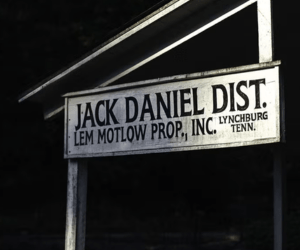
Despite the Jack Daniel’s Distillery attracting about 300,000 visitors each year, most leave after a day trip without spending the night or supporting other local businesses. The lack of overnight lodging drives this trend, forcing travelers to seek accommodations elsewhere.
“Overnight visitation has a massive impact on local tourism economics, and is one of the biggest needs to grow the impact of visitation in Moore County,” French told the Observer on Wednesday. “In fact, statewide, an overnight visitor spends on average around 186% more than a day tripper.
“With sales taxes being the biggest driver of local impact, retention is key. One more burger, one more tank of gas, and especially one more overnight leads to big bucks for local businesses and local tax collections.”
Inside the Numbers

TENNESSEE DEPARTMENT OF TOURISM
A Moore County referendum to increase sales tax by 0.25% failed in March and November 2024.
Lynchburg also struggles to meet demand from visitors who want unique lodging paired with small-town charm. The Retreat at Whiskey Creek plans to change that by converting a portion of distillery visitors into overnight guests.
Described as “a series of luxury tiny home communities that highlight the natural beauty of each destination, while providing an unforgettable escape for families and friends to enjoy,” Oakstone currently has, in addition to Lynchburg, retreats in Monteagle and Tracy City.
In Tennessee, short-term rentals are subject to specific state and local tax requirements. The state imposes a 7% sales tax on short-term rentals, defined as rentals for periods of less than 90 consecutive days. Additionally, there is a state hotel tax of 1% for whole-house rentals – a combined total tax rate of 8% for these properties.
However, if the rental is a hotel or room, the state hotel tax increases to 6%, making the total tax rate 13% for these types of rentals.
Property owners or managers must collect and remit these taxes on the rental's total sales price, which includes all associated fees such as cleaning and pet fees. Compliance with these tax regulations requires registering with the local jurisdiction where the property is located and ensuring timely tax payments.
Moore County's lodging tax is 3%.
The project’s design centers on low-impact, experience-driven development that supports sustainable tourism. The developers will build low-density cabins that blend into the natural landscape, avoiding bright signs or big brands to preserve Lynchburg’s authentic feel.
The Retreat at Whiskey Creek is projected to generate:
• Over $250,000 in annual lodging tax revenue.
• 30-50 direct and indirect jobs.
• Increased property values and investment interest.
• Greater support for local entrepreneurs in food, music, and events.
• More visitor dollars in Lynchburg instead of flowing to neighboring towns.
By driving overnight stays, Hayes believes The Retreat at Whiskey Creek will increase visitor spending on food, retail, and experiences. He said the project will also create jobs in construction and hospitality, produce new tax revenue, and strengthen the local economy by supporting local shops and restaurants.
Moore County boasts 6,773 residents, and Hayes points to destinations like Bardstown, Ky., (population 14,104) and Fredericksburg, Texas, (pop. 11,766) as proof of how thoughtful hospitality-driven growth can transform a community. Bardstown generates $62.6 million in annual tourism spending, supports more than 450 jobs, and brings in $6.9 million in tax revenue. Fredericksburg draws 1.5 to 2 million visitors each year thanks to boutique lodging and events.