Carson: We can't keep kicking the can
OPINION • 6:45 p.m. June 13, 2025

Editor's note: This opinion piece is online-only for the Moore County Observer..
DOUGLAS CARSON II
District 2 Council Member
Dear Residents of Moore County,
My name is Douglas Carson II, and I’d like to take a moment to introduce myself and provide some context about my background and current role. I am a proud native of Lynchburg and currently serve as one of three County Commissioners representing the 2nd District.
My family has deep roots in Moore County. My grandfather, a World War II Army veteran, worked diligently on his nursery and family farm, where I was raised, to support our family. After graduating from Moore County High School in 2008, I began my lifelong commitment to public service by joining the Moore County Volunteer Fire Department, where I served for 11 years.
Following the legacy of my father and grandfather, I enlisted in the United States Air Force, serving nine years on active duty. During that time, I was responsible for managing multi-million-dollar purchases, budget management, and played a key role in workforce planning and personnel management.
In 2018, after completing my military service, I returned home to Lynchburg and began exploring new ways to serve my community. I entered local law enforcement, starting as a 911 dispatcher before advancing to deputy, investigator, and currently serving as a Patrol Sergeant.
In 2022, driven by a desire to be a more active voice in local government and advocate for future generations, I ran for and was elected as a Commissioner for the 2nd District. My candidacy was rooted in a belief that many critical issues were going unaddressed and that it was time for new perspectives in leadership.
The Current Tax Situation
I’m reaching out today to address ongoing concerns and misinformation regarding the recent property tax increase, and more importantly, to highlight a deeper, systemic issue: the absence of long-term planning in our county government.
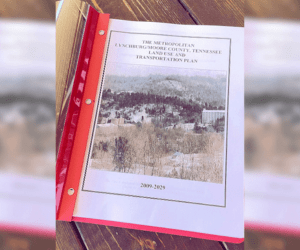
For far too long, Moore County has operated without foundational five- or 10-year plans. Decisions have often been made reactively rather than proactively, resulting in inefficient spending and missed opportunities. As a result, we now face recurring property tax increases – not because of new or sudden challenges, but due to years of deferred action and temporary fixes.
We continue to see evidence of this neglect. Garbage trucks in disrepair are leaking foul-smelling fluids throughout the county, and public buildings are given short-term repairs rather than the comprehensive maintenance they require. Yes, some efforts are underway – but they are not yet being implemented to the degree necessary for long-term sustainability.
Understanding the Teacher Salary Mandate
In 2023, Governor Bill Lee signed legislation mandating that Tennessee teachers’ starting salaries reach $50,000 by the 2026–2027 school year. This mandate included a phased approach:
• $42,000 in 2023–2024
• $44,500 in 2024–2025
• $47,000 in 2025–2026
• $50,000 in 2026–2027
Let me be clear: our teachers absolutely deserve this raise – mandate or not. They dedicate countless hours both in and out of the classroom to prepare our children for success. Their work is invaluable, and they should be compensated accordingly. I have seen this dedication firsthand, including through my sister and sister-in-law, who both teach in a much larger school system facing many of the same challenges.
However, the salary scale must be adjusted fairly. When the starting salary increases, it’s essential that salaries across the entire pay scale are adjusted as well. Otherwise, long-serving educators may end up earning the same or even less than new hires, which is inherently unfair.
Budgeting Challenges and the Tax Levy
Until now, the Director of Schools has been funding these mandated raises using the school system’s fund balance. While this strategy avoided immediate tax increases, it is ultimately unsustainable and risky. Depleting thier fund balance means that when funding is eventually needed – as it is now – the increase is far more dramatic than if it had been handled incrementally.
The director presented two budget proposals to the Budget Committee:
1. A budget with starting salaries at $47,500 (meeting the 2025–26 requirement).
2. A budget with starting salaries at $50,000 (fulfilling the full mandate a year early).
The proposal also included $135,000 for a new school bus and $75,000 for new science textbooks.
Unfortunately, misinformation began circulating – particularly the claim that 17 certified teachers would need to be cut if the full budget wasn’t approved. When I asked the Director where those cuts would be made, he admitted he didn’t know. To cite a specific number without a plan for implementation is, in my view, misleading and served only to pressure the Council.
The original proposed tax levy increase was $0.22, or roughly $1.2 million. Importantly, none of the other county departments budgets received an increase – this entire levy was tied solely to the school budget.
I voted against that initial proposal.
A Responsible Compromise
Following that vote, those of us who opposed the proposal were asked to offer alternatives. I recommended:
• Adopting the $47,000 starting salary mandated for the current budget year (per the governor’s phased plan).
• Removing the $135,000 line item for the bus.
Another council member countered with a proposal to move to the $50,000 starting salary and eliminate both the bus and the science textbooks. Ultimately, a compromise was reached: a revised tax levy of $0.18, or approximately $900,000, was approved.
I was the swing vote in that decision.
One commenter on social media claimed that my vote saved taxpayers $10 per $100,000 of property value. I cannot confirm the exact number, but the revised levy did save taxpayers approximately $210,000 or $0.04 on the tax levy. My goal was not to deny teachers their well-earned raises, but to reduce the financial burden on residents – whom I was elected to represent.
Addressing Buses and Textbooks
Why cut the bus and books? The bus in question is a spare, and we currently have multiple spares available. While the replacement is needed in the long term, it is not a critical need this year.
As for the textbooks, I personally do not support cutting educational materials. However, I was informed there may be alternative funding options available for the science books, which helped justify their removal from this year’s budget.
Retirement for County Employees
After the initial vote, a new proposal emerged to raise the tax levy by an additional $0.06 (approximately $300,000) to fund retirement benefits for county employees – not including elected officials or school system staff, who already have a retirement plan.
The state recently provided a buy-in cost of approximately $4.8 million, and we were granted a 10-year amortization period – the first time such an offer has been extended to any Tennessee county. This initiative will benefit about 70 employees; of whom some have dedicated 20 to 40+ years to Moore County without retirement benefits.
The return on this investment is significant. It will enhance recruitment and retention while saving the county money by reducing turnover, training costs, and large vacation or comp time payouts. Supporting this retirement plan is simply the right thing to do.
Looking Ahead
So now we face a familiar decision: do we continue to "kick the can down the road," or do we finally act with foresight and responsibility?
We must fund our teachers’ raises – because it’s not only mandated, it’s deserved. We must support our county employees – because they have earned it through decades of dedicated service. And we must move beyond short-term fixes and build a long-term strategy that protects both our public workforce and our taxpayers.
Thank you for your time, your trust, and your continued engagement in the future of Moore County.
Sincerely,
Douglas Carson II
County Commissioner, 2nd District
Moore County, Tenn.