Moore County’s Forgotten Blueprint for Growth
12:58 p.m. Nov. 5, 2025

DUANE CROSS
MCO Publisher•Editor
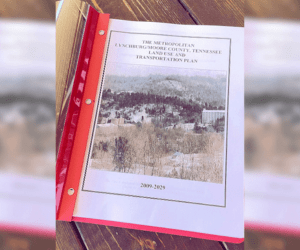
Many people in Lynchburg and Moore County may not be aware of a detailed guide for local growth and development: The Metropolitan Lynchburg/Moore County, Tennessee Land Use and Transportation Plan. This plan, created to guide decisions from 2009 to 2029, was developed by county planners Paula Thomas, Mary Ann Ellis, Tara Parks, Tommy Brown, Dara Shelton, Karl Pyrdom, and Gerald Hinkle, as well as the Tennessee Department of Economic and Community Development's Local Planning Assistance Office. It was officially adopted after a public hearing at a Planning Commission meeting on Jan. 5, 2010.
At the Nov. 3 Planning and Zoning Commission meeting, Chairman Dexter Golden brought renewed attention to the longstanding yet frequently neglected plan, initiating a process of systematic local review and discussion.
The Observer has obtained a copy of this foundational document. This article introduces a series that will analyze the plan's principal sections, with forthcoming installments dedicated to its strategies for urban development, transportation infrastructure, and preservation of Moore County’s distinctive landscape. By previewing the scope of the series, the discussion aims to elucidate how the plan may influence the county’s long-term trajectory.
A Plan Built for Moore County’s Unique Character
Every community experiences growth, but how leaders manage it determines whether a county succeeds or faces challenges. The Land Use and Transportation Plan aims for a balanced approach, focusing on managing growth to protect natural resources, preserve rural character, and guide development with care and consideration.
Key Development Management Principles
Protecting the Natural Environment
New development should minimize harm to soils, slopes, plants, wetlands, and watersheds. In areas that are less suitable due to natural conditions, there must be limits or special measures. All building proposals undergo careful review, especially where slopes are steep or there is a risk of flooding, to ensure the environment is not harmed for short-term benefits.
Infrastructure and Services
No public or private development should outpace the county’s ability to provide essential services. Developers cover infrastructure costs, and any expansion must fit Moore County’s budget. The availability of utilities determines where builders can construct higher-density projects.
Fiscal Stability
Major capital decisions are informed by multi-year budgeting and community facility plans, which help maintain the county’s financial health and tax base.
Livability for All
The plan considers economic, environmental, and social impacts, including public safety and keeping young people in the area. For example, it recommends offering scholarships that require local graduates to return and expanding leadership programs to retain talent in Moore County.
Rural Preservation vs. Rural Development
The plan divides Moore County’s large rural areas into “Rural Preservation” and “Rural Development” zones, each with distinct characteristics. In Rural Preservation Areas, steep land, large farms, and woodlands have largely kept suburban sprawl at bay. Wildlife thrives, and historic sites like the old Camp Forrest artillery range, wetlands, and hunting reserves act as natural barriers to development.
Rural Development Areas
The eastern regions of Moore County, particularly those encompassing the fertile agricultural land adjacent to Tims Ford Lake and near Tullahoma, have experienced an influx of residential construction that often results in the conversion of productive farmland into housing developments. For example, the subdivision on Shipman Creek Road, cited in the 2010 Planning Commission minutes, replaced over 30 acres of active farmland with single-family homes.
This increase in population density has led to a corresponding rise in vehicular traffic, placing considerable strain on antiquated local roadways, such as Awalt Road, which residents frequently reported as congested and in need of repair. Consequently, county officials identified infrastructure upgrades in these corridors as a top priority to sustain both current demands and future growth.
Challenges and Solutions
Sprawl and Zoning Misuse
Loose zoning rules (A-1 and A-2 districts) have led to scattered, low-density development, straining basic services such as wastewater, police, and fire protection. The plan recommends changing zoning to keep larger tracts together and promote “conservation subdivisions,” where residents live in groups of homes surrounded by open space and protected natural areas.
Changing Rural Dynamics
The introduction of advanced sewage treatment technologies and the expansion of nearby urban centers, including Tullahoma, Shelbyville, and Murfreesboro, are expected to intensify development pressures within Moore County. This evolving context risks agricultural land being perceived primarily as vacant or transitional space available for development. County leaders underscore that such a perspective undermines the economic and cultural significance of agriculture in the region. Consequently, they advocate for proactive and deliberate policy measures to safeguard agricultural land, emphasizing its ongoing productive value rather than reducing it to potential development sites.
Development policies for rural areas include:
• Promote agriculture as an economic engine, not as “undeveloped” land.
• Encourage compatible commercial and tourism uses (e.g., farmers' markets, bed and breakfasts) that enhance rural life and promote local community development.
• Prioritize environmental stewardship by protecting stream corridors, woodlands, and historic sites.
• Require new housing to utilize conservation subdivision design, maximizing open space and reducing environmental impact.
• Use flexible planning to link density bonuses with open space preservation, meeting various household needs.
• Include stormwater management and habitat restoration in development plans, allowing the county to utilize open spaces for both recreation and environmental protection.
• Urge landowners to work together and voluntarily follow guidelines, especially when dividing large tracts of land.
Roads, Growth, and Community Identity
The plan highlights ongoing state initiatives aimed at upgrading primary transportation corridors, including Hwy 55 and 41A, as a means to mitigate regional traffic congestion. Despite these infrastructural aspirations, it acknowledges that Moore County’s relatively modest population growth has relegated such projects to a lower ranking among statewide priorities.
Notably, the plan emphasizes that any future roadway improvements must align with broader policy objectives, specifically by promoting mobility and economic development while preserving the county’s historic character and rural identity. This integrative approach aims to ensure that transportation enhancements contribute to sustainable growth and the preservation of the community’s unique cultural landscape.
The Metropolitan Lynchburg/Moore County Land Use and Transportation Plan extends beyond a set of rules. It calls citizens and leaders to take action. By carefully guiding growth, Moore County can preserve its rural identity, protect the environment, and secure a bright future for generations to come.