The Road to Industry Runs Through Infrastructure
Land Use Plan lays out where industry belongs – and what it will take to get it there
8:09 a.m. Nov. 21, 2025

DUANE CROSS
MCO Publisher•Editor
The Industrial section of the Lynchburg/Moore County long-range plan, OK'd by the Metro Council in January 2010, has two main goals: to protect and strengthen the county’s current industries and to prepare for future growth. Since Moore County’s economic development depends on infrastructure, especially sewer service and transportation, the plan calls for targeted investments in these areas to help attract new industries and support existing ones.
Current Industrial Landscape
Moore County’s industrial activity is modest but essential, anchored by distillery warehousing and the Bluegrass Cooperage facilities along Booneville Highway (Hwy. 129). While this corridor already supports industrial use, its limitations are significant:
• Hwy 129 is still a two-lane road, which makes navigation difficult, especially at its intersection with Hwy 55.
• Public sewer service ends at Chapman Acres, so most of Hwy. 129 does not have the infrastructure needed for more industrial development.
Due to these issues, the plan suggests only limited expansion along Hwy 129 until important road and sewer upgrades are finished. These upgrades include getting land for turn lanes and increasing sewer capacity to support modern industry.
Primary Future Growth Area: Northeastern Moore County
The plan points to the northeastern corner of the county, along Hwy 41A near the Coffee County line, as the best area for future industrial development. This choice is based on several key advantages:
• Proximity to transportation assets:
• North Field (Tullahoma Regional Airport)
• Rail service
• Interstate 24 access
• Existing utility infrastructure nearby:
• The Tullahoma Utilities Board (TUB) already provides sewer service to Motlow College, which makes it easier to expand to nearby industrial sites.
These factors make the Hwy 41A/Motlow area the county’s main location for future industry. Development along Hwy 129 is still possible, but only if major infrastructure improvements are made.
Infrastructure as a Catalyst for Industrial Growth
The plan stresses that expanding public sewer service and improving roads are key to creating new industrial opportunities. Without these upgrades, it will be hard to attract new industries. With them, Moore County can better compete for automotive, distribution, and other companies looking to move to Tennessee.
Objectives and Policies for Industrial Development
Objective A: Retain Existing Industries and Provide Suitable Sites for Future Growth
Key policies include:
1. Support and promote industrial site locations through Metro Council action.
2. Identify and fund necessary infrastructure, especially where new industrial land would be most viable.
3. Improve road capacity and traffic conditions in current and candidate industrial zones.
4. Actively collaborate with the Chamber of Commerce and the Middle Tennessee Industrial Development Association (MTIDA) to attract and retain industry.
5. Protect community health and the environment by discouraging industrial uses with harmful or incompatible impacts.
Objective B: Establish Standards for New and Expanding Industrial Development
Key policies include:
1. Require all new industrial projects to meet site development standards.
2. Encourage industrial uses to locate near appropriate transportation facilities, without overwhelming existing networks.
3. Ensure industrial development aligns with infrastructure planning, especially for water, sewer, and transportation services.
4. Use landscaping, screening, and buffering to reduce conflicts between industrial and other land uses.
5. Explore the creation of an official Industrial Park, with top candidate locations:
• Northeast corner of the county near North Field
• Hwy 41A near Motlow College Road
6. Partner with the Tullahoma Utilities Board to expand public sewer service to support new sites.
7. Strengthen zoning ordinances with additional site-plan review requirements for industrial and non-residential development.
More About The Land Use Plan

Moore County’s Forgotten Blueprint for Growth
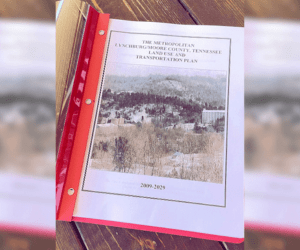
Many people in Lynchburg and Moore County may not be aware of a detailed guide for local growth and development: The Metropolitan Lynchburg/Moore County, Tennessee Land Use and Transportation Plan. This plan, created to guide decisions from 2009 to 2029, was officially adopted on Jan. 5, 2010.

The Plan: Revitalize downtown, shape growth
Downtown Lynchburg, which is Moore County’s Central Business District, is both an economic hub and a symbol of local heritage. The 2009-29 Land Use and Transportation Plan notes that many residents want to “pump new life into the County’s square and surrounding neighborhoods” while keeping the area’s rustic appeal.