Solar Farm: Mud, crashes, and creek concerns
Council scrutinizes stormwater controls, traffic hazards tied to construction
8:01 p.m. Dec. 15, 2025
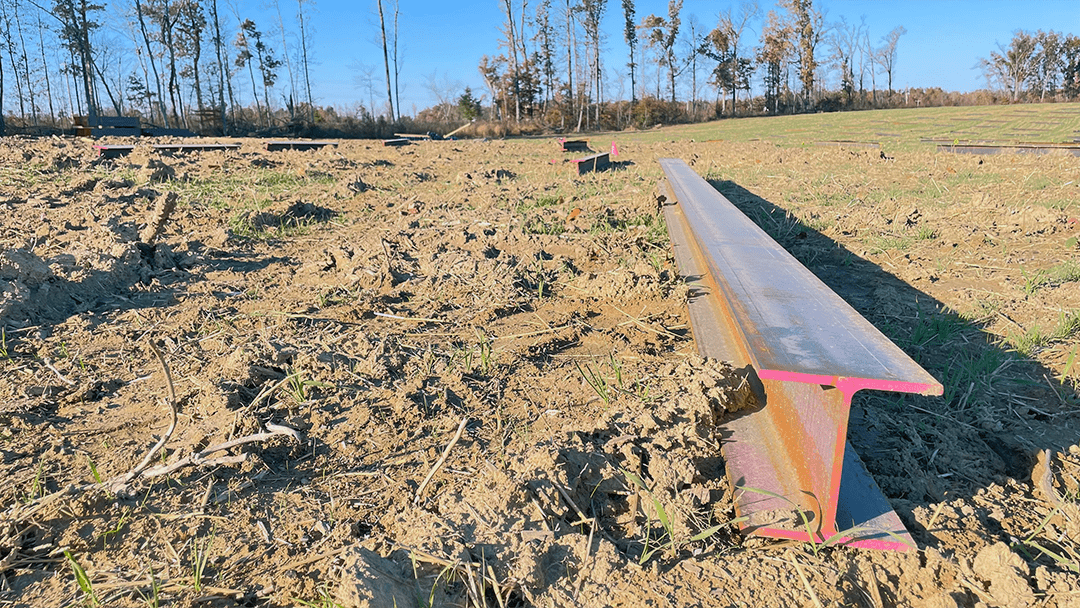
Metro Council members requested regular updates, and Silicon Ranch project representatives agreed to maintain open communication and provide direct points of contact to address constituent concerns.
DUANE CROSS
MCO Publisher•Editor
On Monday, Dec. 15, the Metro Council received a detailed update on the construction of the county’s solar farm project, with discussion centering on stormwater management, impacts to nearby creeks, and growing concerns about roadway safety in the construction area.
Tony Grow of Grow Environmental Solutions addressed the council, explaining that his firm was hired by Metro Moore County to provide third-party environmental and engineering oversight for the project. Grow Environmental’s primary role is to monitor stormwater controls and ensure the project remains in compliance with state and federal regulations.
Grow said the entire site has now been cleared and all required sediment basins have been installed. Seeding and stabilization efforts have begun in some areas, though much of the site remains exposed due to the scale of the project.
“This site discharges to two different creeks,” Grow said, noting that Hurricane Creek is classified as an Exceptional Tennessee Water, which requires additional protection under state standards. “We pay a lot of attention to that stream.”
According to Grow, inspections are conducted twice a week by the contractor, LPL Solar, and twice a week by Grow Environmental. In addition, weekly aerial imagery is captured to track progress and identify problem areas. Grow said that imagery will be made available to the public through the local newspaper.
'The response has been there'
Grow acknowledged that during several recent rain events, mud and sediment reached the headwaters of Hurricane Creek near the substation. However, he said installed control structures prevented most of the sediment from moving downstream, and cleanup efforts were initiated promptly.
“LPL Solar has been very responsive,” Grow said. “They’ve been out there the morning of or the day after these events. There’s still work to be done, but the response has been there.”
Grow emphasized that stormwater controls require constant maintenance, including cleaning sediment basins, repairing silt fencing, and stabilizing disturbed areas. Once construction exceeds 50 acres, Tennessee regulations require monitoring of stormwater outfalls after rain events of a half-inch or more – a costly and labor-intensive process. Stabilizing the site as quickly as possible reduces the need for such monitoring, he said.
Concerns were raised by residents living along Hurricane Creek, who question the timeliness of cleanup efforts and expressed alarm over sediment discoloration in the water.
One resident observed muddy and white-colored water flowing into Hurricane Creek and downstream areas for extended periods following rainfall. Grow responded that the white discoloration is not a chemical or fire retardant, but clay common to the area’s geology that remains suspended in the water column longer than heavier sediment.
“The standard we have to meet is 140 milligrams per liter of TTS [total suspended solids],” Grow said. “The site is maintaining that right now. If I start seeing red sediment, that’s when I get real concerned.”
Grow added that while suspended clay can discolor the water, it does not typically harm aquatic life unless heavier sediment accumulates and smothers stream bottoms. He encouraged residents to continue reporting specific problem areas so they can be inspected and addressed.
'We are actively addressing it'
Roadway safety quickly became a major focus of the discussion, particularly along Cumberland Springs Road. District 1 Commissioner Shane Taylor said the sheriff’s department has received an increasing number of calls related to mud on roadways following rain events.
“In all of 2024, there may have been one or two crashes on Cumberland Springs,” Taylor said. “This year there’s been five – three of them in the last 30 days.”
Taylor said deputies have responded to incidents where drivers slid off the roadway, and he noted that the Tennessee Highway Patrol has issued citations related to road conditions. He emphasized that public safety and the cost of road repairs are major concerns.
Rob Riley, director of project development for Silicon Ranch, addressed the council on behalf of the developer. He said the company is actively working to mitigate mud tracked onto public roads.
“We hear you,” Riley said. “We are actively addressing it.”
Riley outlined steps being taken, including adding large amounts of rock at construction entrances to knock mud from truck tires, increasing street sweeping frequency, and installing rumble strips to further reduce debris leaving the site.
Silicon Ranch has trucked in 175 tons of stone for a single zone, with additional material on the way.
Street sweepers are now running multiple times per day, and three vacuum-equipped sweepers are being added to improve effectiveness. LPL Solar is also focusing on prevention by accelerating grading and stabilization, so trucks are no longer driving through mud.
Council members also raised concerns about sweepers using private driveways to turn around, the need for better signage and spacing between sweepers and traffic, and whether local contractors could be more involved in the project. Silicon Ranch representatives said they would relay concerns to LPL Solar and make introductions to local firms where possible, though subcontracting decisions ultimately rest with the general contractor.
Council members requested regular updates so they can respond more effectively to constituent concerns. Project representatives agreed to maintain open communication and provide direct points of contact for immediate issues.

Decisions on county-altering projects were made in public meetings attended by few people, raising hard questions about civic engagement, economic influence, and accountability.
• Opinion by Duane Cross