Raline pitches visibility, accountability in sheriff's bid
Candidate says failures shaped service-first approach to law enforcement
2:15 p.m. Feb. 12, 2026
DUANE CROSS
MCO Publisher•Editor
With the 2026 Moore County elections approaching later this year, the Observer is conducting one-on-one interviews with candidates who have officially qualified for office. Candidates are not given questions in advance and have no input on the final written coverage. As part of the Observer’s commitment to independent, fact-based reporting, campaign letters or promotional submissions from candidates are not accepted.
• • •
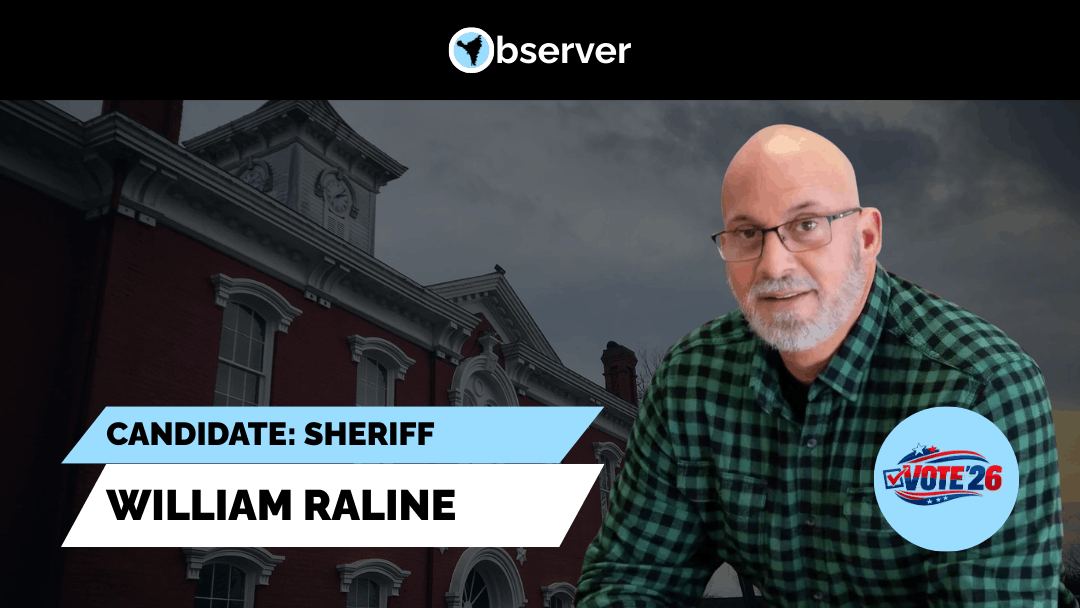
William “Will” Raline says he is running for Moore County sheriff because he values being visible, holding the department accountable, and serving the public. He says his approach comes from both his past mistakes and his long career in law enforcement.
Raline, 52, currently serves as police chief in Monteagle, a role he said he initially did not seek but came to view as an opportunity to create meaningful change through leadership focused on people rather than rank.
Before becoming a full-time police officer, he worked in the corporate world, where he made more money but felt more stress. He chose law enforcement because he wanted a stronger sense of purpose.
First 14 Days: Listening, Restructuring, Coverage Review
Raline said that if elected, he will begin with a full review of the department. He plans to talk directly with every employee, including those who work in the jail and corrections.
He said these meetings would focus on three questions: why employees want to serve, what changes they think are needed, and how the department can improve.
Instead of hiring more staff right away, Raline wants to look at how work is divided now. He said changing job duties could make the department more efficient and improve response times without extra costs, but hiring might be needed if coverage falls short.
He added a key part of the review is making sure the department can always respond to emergencies, since residents expect help any time they call 911.
Visibility, Accessibility as Leadership Priorities
During the interview, Raline often said that a sheriff in a small county needs to be easy to find and available to the public.
He said that being open and present in the community builds public trust and helps keep tourism strong in Lynchburg, as visitors return because they feel safe.
He emphasized that being accessible means returning calls promptly and staying accountable to everyone, regardless of their politics or voting history.
Discipline, Professionalism, Officer Accountability
Based on his time in law enforcement, Raline said he holds officers to high standards and has disciplined or fired those who did not meet expectations.
He said these actions are needed to protect citizens and respect the serious power police have, especially when making arrests that take away someone’s freedom.
Raline also stressed the importance of using good judgment and treating people with respect. He said tickets and arrests should help correct behavior, not just bring in money.
Governance, Transparency, Structural Changes
Raline shared several policy ideas related to how the department is run and how it stays accountable to the public:
• Opposition to deputies serving on Metro Council: He said law enforcement employees should not sit on the governing body that determines departmental pay or policy.
• Routine public reporting: He called for regular disclosure of arrests, drug activity, and enforcement trends so citizens understand community safety conditions.
• Collaborative budgeting: Raline described negotiating priorities such as patrol-car replacement while ensuring transparency about tax spending.
He also said small communities should carefully weigh the costs and how people feel about using SWAT/military-style equipment, ensuring officer safety and community trust are both considered.
Addressing Past Misconduct
Raline devoted a portion of the interview to discussing an incident from more than a decade ago during his tenure in Franklin County, framing it as a turning point in both his personal life and his professional outlook.
He acknowledged that while going through a divorce at the time, he engaged in behavior he now characterizes as reckless and inconsistent with the standards expected of a law-enforcement officer, including sending inappropriate images.
Franklin County Sheriff Tim Fuller said Raline was on duty when the images were sent. “I gave him a choice, and he resigned.
“To his credit, for what it’s worth, he did a very good job, as far as his performance, but this was the end of the road. You just don’t do that.”
Raline confirmed the conduct led to his resignation from the sheriff’s department and ultimately prompted him to reassess his decisions and priorities.
Rather than disputing the outcome, Raline said he accepted responsibility and chose not to contest the consequences, describing the episode as “the only skeleton” in his past and now using it as a cautionary example when mentoring younger officers on professionalism, judgment, and the permanence of digital communication.
“That was stupid,” Raline said. “I did do that. I'm not going to deny that. I misunderstood the relationship that I had with someone, and I lost a very good friend over that.”
He also emphasized the broader personal context of the period – including marital separation and instability – but stopped short of offering excuses, repeatedly describing the behavior as a mistake and stressing that personal accountability is central to leadership in law enforcement.
Raline said the experience ultimately reshaped how he approaches supervision and mentorship, informing his emphasis on discipline, ethical conduct, and intervention when officers appear to be struggling personally or professionally. He presented that growth as evidence that past failures, when acknowledged directly, can inform more responsible leadership moving forward.
Campaign Message: Service Shaped by Experience
In closing the interview, Raline framed his candidacy around a narrative of personal accountability, faith-informed service, and lessons learned over time, arguing that lived experience – including failures – has prepared him to lead more effectively.
He described his approach to public office as rooted in humility and responsibility rather than authority, emphasizing that the sheriff’s role is fundamentally about serving citizens and maintaining their trust.
That philosophy, he said, is inseparable from his willingness to acknowledge past mistakes and demonstrate growth, which he presented as essential qualities for anyone entrusted with law-enforcement leadership.
Raline also linked his message of service to broader themes raised throughout the interview – including visibility in the community, transparent communication with residents, and consistent accountability within the department – positioning those priorities as practical expressions of the values he says now guide his leadership.
Ultimately, he portrayed the campaign not as a referendum on résumé credentials alone but as a choice about character and stewardship, telling voters that his mistakes, ownership of them, and subsequent growth define the kind of sheriff he believes Moore County needs.