Tiny-Home Project Could Pay Off
Benefit may be less about housing and more about revenue generated
4:05 p.m. March 20, 2026

DUANE CROSS
MCO Publisher•Editor
On the far side of the covered bridge spanning Mulberry Creek at 975 Main St., work is stirring again at The Retreat at Whiskey Creek, a tiny-home community more than five years in the making. Approved in 2021, the project has moved forward in fits and starts, but signs of life are emerging once more as construction resumes on a development that could expand Moore County’s tax base and help keep more tourism dollars in Lynchburg.
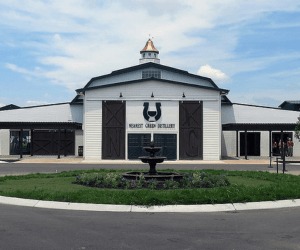
Developers are marketing The Retreat as a “luxury” tiny-home community. Promotional materials describe it as a “rustic, resort-inspired community” that pays homage to Lynchburg’s history and distilling heritage, and note that it sits about a mile from the historic Square – close enough, backers hope, to appeal to both locals and travelers.
If completed as described, the 79-home project could deliver its biggest public benefit through taxes.
Built as permanent dwellings on individual lots, assessed as residential real property, with the builder paying infrastructure costs and the HOA handling long-term upkeep, the development could add property-tax value, generate occupancy-tax revenue from short-term rentals, add sewer customers to the utility system, and help local businesses capture more visitor spending without placing major new costs on taxpayers.
A Stronger Fiscal Equation
For a small county, that is the heart of the argument.
New housing is not always a fiscal win. Often, the problem is not the homes themselves but the public cost of extending roads, utilities, drainage, and related infrastructure. Based on the project layout and proposed maintenance structure, the public-cost equation appears more favorable than in a conventional subdivision.
If the developer covers those upfront costs and the HOA remains responsible for roads, stormwater systems, utilities, lighting, and common areas, local government avoids both the initial capital burden and much of the long-term maintenance exposure that can turn growth into a budget strain.
That leaves a simpler question: Will the project's annual revenue outweigh its annual cost of serving it?
The property-tax case is straightforward. Seventy-nine homes on the tax rolls would add recurring taxable value that underused land does not produce. In Moore County, property taxes are based on a 2025-26 rate of roughly $1.7412 per $100 of assessed value. Because the homes would be permanent dwellings on individual lots and assessed as residential real property, they would add conventional residential value to the tax base rather than falling into a murkier classification.
More Than a Neighborhood
The short-term-rental component could make that case even stronger.
If many of the homes operate as Airbnb or other short-term rentals, the development would not function solely as a neighborhood. It would also operate, in part, as a hospitality product tied to Moore County’s tourism economy. That matters because short-term stays can generate multiple types of public revenue: property tax from the homes themselves, occupancy tax from guest stays, and additional taxable spending at local businesses.
That local sales-tax context is important. Moore County’s total sales tax rate is 9.5%, made up of 7% state tax and a 2.5% local option tax. Voters recently have twice rejected proposals to raise that rate to 9.75%, meaning officials have limited room to increase revenue through tax-rate hikes. In that setting, a development that expands the tax base and generates more taxable transactions without raising rates may be especially attractive.

Keeping More Visitor Dollars in Town
The tourism case is just as important.
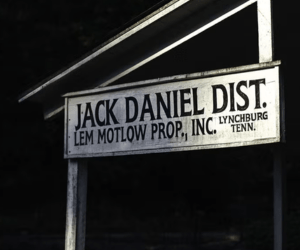
Jack Daniel’s says about 300,000 people visit the distillery in Lynchburg each year. Moore County does not need to create tourism demand from scratch. The opportunity is to keep more of the money visitors already bring.
The county’s own tourism numbers suggest there is room to do that.
According to the Tennessee Department of Tourist Development’s 2024 county travel snapshot, Moore County showed direct visitor spending of about $15.59 million, with retail and food-and-beverage purchases making up a far larger share than lodging. In Moore County, 81% of spending is done by visitors, while only 3% is spent on lodging. By comparison, 72% of spending in Franklin County is by locals, and 67% in Bedford County, according to the South Central Tennessee Tourism Association (SCTTA).
That underscores both Moore County’s dependence on visitor dollars and its room to capture more overnight spending.
The difference between a day visitor and an overnight guest is not abstract. The Tennessee Visitor Profile shows that a day visitor spends an average of $115, compared with $329 for an overnight visitor. A day-tripper may tour the distillery, buy lunch, and leave. An overnight guest is more likely to buy dinner, breakfast, coffee, snacks, and retail items, and to spread those purchases across multiple businesses instead of making a single stop.
The longer visitors stay, the more chances Moore County has to keep those dollars local.
Why Restaurants Could Benefit First
That is why restaurants could be among the first businesses to benefit.
SCTTA data shows food and beverage already ranks among Moore County’s strongest visitor-spending categories. If this project adds meaningful overnight capacity, tourists would have more reason to stay in Lynchburg after a distillery visit rather than drive away the same day. That could mean more dinners sold, more breakfasts served, more coffee stops, more takeout orders, and more foot traffic on the Square.
Taken together, the project begins to look less like a simple housing development and more like a way to grow the tax base and keep more visitor dollars in Moore County.
Limited Public-Side Risk
The public-cost side also appears narrower than it would in a conventional subdivision. Because many units are expected to function as short-term rentals rather than full-time residences, the project may place less pressure on school enrollment than a conventional subdivision, though that would depend on final occupancy patterns.
The builder would fund the infrastructure, the HOA would remain responsible for long-term upkeep, and the homes would add 79 sewer customers, helping to spread utility system costs across a larger customer base. The biggest unknown would be health issues involving tourists, but that does not necessarily mean the county would have to spend more on emergency and first-responder coverage.
A short-term-rental-heavy community can still experience traffic congestion, parking issues, and occasional EMS calls related to visitor health concerns. But those appear to be narrower concerns than the broader fiscal risks that local governments often face when new residential growth requires public infrastructure investment, increased school enrollment, and expanded public service demands.
The Bottom Line
If the project is built as described, Moore County could gain on several fronts at once: a larger residential property-tax base, occupancy-tax revenue tied to overnight stays, more locally taxed spending, stronger business activity for restaurants and service providers, and a broader sewer-customer base to help distribute utility-system costs. In a county anchored by Jack Daniel’s and the Whiskey Trail, that combination could make the development one of the more fiscally attractive forms of growth available.
In the end, the biggest public benefit may be less about the tiny homes themselves than the tax and tourism revenue they generate long after they are built.