Young wants Weaver-linked companies in receivership
4:02 p.m. Jan. 7, 2026

DUANE CROSS
MCO Publisher•Editor
A court-appointed receiver overseeing the Uncle Nearest entities is asking a federal judge to pull nearly all of Fawn Weaver’s related companies into the receivership, arguing their finances are deeply intertwined and that a new Bedford County lawsuit underscores the need for tighter court control.
Receiver asks to expand estate
In a notice filed Wednesday, Jan. 7, in the U.S. District Court for the Eastern District of Tennessee, Receiver Phillip G. Young Jr. requested a hearing on his pending motion to clarify the scope of the receivership order in Farm Credit Mid-America PCA v. Uncle Nearest Inc., et al. After reviewing bank and financial records produced under an agreed order, Young said he has concluded that most “Related Entities” have been significantly commingled with the existing receivership entities.
Young told the court he now wants a hearing on whether to add all of those related companies to the receivership estate, with the exception of three entities he has decided not to pursue. He asked that the hearing be set no earlier than Jan. 28 to give his team time to file a detailed brief outlining the alleged commingling and to comply with prior scheduling directives.
• Notice of Request for Hearing
Three entities dropped
After reviewing thousands of pages of records, Young said there is “no value in further pursuing” three entities: Uncle Nearest Spurs VI, LLC; Classic Hops Brewing Co.; and the Weaver Interwoven Family Foundation. In the four-page filing, he refers to those as the “Excluded Entities” and formally withdraws his motion for clarification as to them.
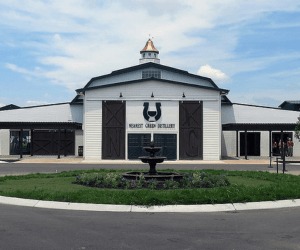
For the remaining Weaver- and Uncle Nearest–affiliated companies – including Humble Baron Inc., Shelbyville Barrel House BBQ LLC, Grant Sidney Inc., Quill and Cask Owner LLC, Nashwood Inc., Shelbyville Grand LLC and 4 Front Street LLC – Young said bank records show extensive transfers to and from Uncle Nearest and other receivership entities. He highlighted more than $20 million in transfers between Grant Sidney Inc. and entities already in the receivership, as well as related companies operating rent-free at the Nearest Green Distillery while key expenses were paid by Uncle Nearest Inc. before the receivership.
New Bedford County suit raises stakes
The filing also reveals that on Dec. 29, without the receiver’s knowledge, Weaver, her husband Keith Weaver, and Grant Sidney Inc. sued former Uncle Nearest chief financial officer Michael Senzaki and his company ZMS Strategies Inc. in Bedford County Chancery Court. Their 38-page complaint accuses Senzaki of leading a years-long fraud and concealment scheme that allegedly diverted tens of millions of dollars in equity value and company funds, forged Weaver’s signatures on stock and loan documents, and hid more than $7 million in unpaid vendor obligations.
The Bedford County lawsuit alleges Senzaki used forged stock transfer certificates to move Weaver’s vested equity interests and then leveraged those interests for his own benefit, including buying a Las Vegas home and vehicles and funding gambling, while concealing the transactions. The complaint further claims that a false narrative blaming Weaver and other founders for Uncle Nearest’s debt led to cancellations of more than $1 million in speaking and board engagements for Weaver and the freezing of at least $9.75 million in funding for Keith Weaver’s unrelated business ventures.
Argument for bringing more entities under control
Young said the Bedford County complaint appears to assert causes of action that are at least “derivative of those belonging to the receivership entities,” even though it does not mention the federal receivership, the receiver, or the Chattanooga-based judge overseeing the Farm Credit case. If the claims have standalone value for Grant Sidney Inc. apart from any value to Uncle Nearest Inc., that value “should be realized by this receivership estate” because of the extensive commingling between the companies, he told the court.
The receiver also warned that other related companies may hold similar intangible assets, such as legal claims, that he cannot fully evaluate without direct access to their financial statements, books, and records. He wrote that the only way to determine whether any of the related entities add value to the estate is to bring them into the receivership, with the understanding that he may later ask to abandon interests in entities that ultimately prove to have no value.
Scheduling request and missed deadline
Young acknowledged that an earlier status update on his motion for clarification was due Dec. 26 under a prior court order and that he missed that deadline. He attributed the lapse to holiday schedules and the time it took his legal and financial team to analyze the economic value of pursuing the related entities, calling the omission an oversight and asking the court’s forgiveness.
In addition to proposing a hearing no earlier than Jan. 28, Young said he would be amenable to a more extended briefing schedule that would give his team at least 14 days to file a commingling brief, 14 days for the related entities to respond, a hearing seven days after that response and a witness list due three days before the hearing. If the issues are not resolved by Jan. 26, Young pledged to file another status report for the court by that date.


Uncle Nearest receiver eyes sale as financial troubles mount
Three prospective buyers remain in negotiations, but receiver Phillip Young offers little hope of a return for shareholders.

Sixth Circuit moves Uncle Nearest appeal forward
Weavers, Grant Sidney may continue appeal over Uncle Nearest receivership, with briefing beginning in November.

Receiver: Permanent Grant Sidney control may not be needed
September filings include dismissal request from Keith Weaver, a withdrawn motion from Fawn Weaver, and another October deadline.

Humble Baron ordered into Chapter 7 bankruptcy
Federal judge hears evidence concerning unauthorized transfers, insider transactions, years of losses, and removed equipment.

Humble Baron gets more time as bankruptcy questions mount
Humble Baron remains in Chapter 11 for now as questions continue over $100K+ in transfers, a $1.1M IRS claim, and unfiled taxes.
Receiver urges Chapter 7 for Humble Baron
Humble Baron faces a bankruptcy hearing after failing to return $66,350 in unauthorized transfers by a court-ordered deadline.