
Public Interest is Not a Master Key
Demand for access does not become justified because someone in authority made the wrong call
#Opinion • 5:50 p.m. May 8, 2026
There is a sentence in Tabitha Evans Moore’s reply that explains the whole problem, though not in the way she intended.
“I simply followed his lead.”
That is not a defense. It is an attempt to turn a public official’s mistake into permission.
Moore County Administrator of Elections Jim Sanders has already admitted he did the wrong thing. He opened sealed ballot boxes after the May 5 primary and allowed a member of the public – the editor of a news website, yes, but still a member of the public – to handle ballots before certification. That should not have happened. Sanders said so himself.
But Moore’s response deserves its own scrutiny because it reveals a second problem: the belief that declaring something “newsworthy” gives a journalist the right to push past process, election safeguards, and common sense.
It does not.
The issue is not whether a reporter may ask questions. Of course she may. The issue is whether a reporter may turn a disputed request into physical access to ballots before the election process is complete.
That is where the argument collapses.
Results Are Public. Ballots Are Protected.
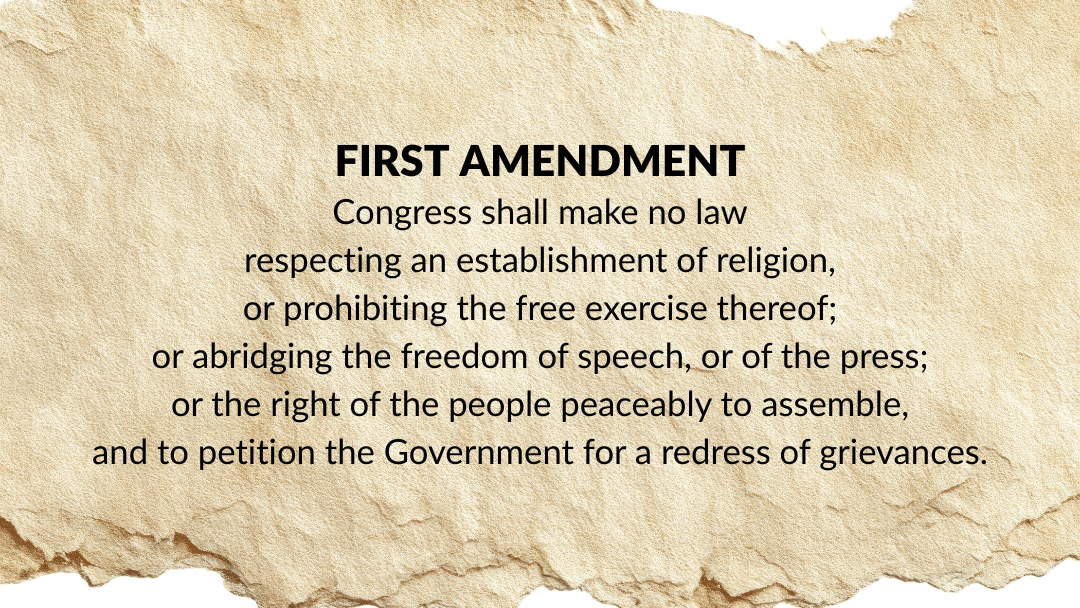
“As a journalist, I have a First Amendment right to election results.”
No. Not like that.
The First Amendment protects the right to report, publish, question, and challenge government action. It does not give a reporter a personal right to handle ballots.
Election results are public. Ballots are protected. Those are not the same thing.
“Mr. Sanders provided me the tally sheets but resisted providing the write-in votes.”
That sentence tries to make Sanders’ resistance sound like secrecy. It may have been the one part of the morning when the process still had a chance to hold.
If the write-in names were not part of an eligible, countable primary result, then the demand was not for certified election results. It was for raw ballot information before the process was complete.
That is a very different ask.
“Election officials in other counties, whom my lawyer and I have spoken to, confirmed he could have printed those off without opening the ballot box.”
Then the proper conclusion is that Sanders should not have opened the box.
It is not that Moore should have been allowed to handle the ballots. It is not that the ballot boxes became fair game. It is not that a reporter’s insistence was vindicated.
If there were a lawful way to provide responsive information without breaking seals, it would only make the decision to open the boxes look worse.
Public Interest is Not Process
“Those named write in votes concerned the public interest on Wednesday.”
Public interest is not a magic phrase.
Lots of things are in the public interest: sealed ballots, chain of custody, voter confidence, a clean certification process, and election workers who are not pressured into making reckless decisions.
The problem is pretending that “public interest” belongs only to the person demanding access.
“One hundred twenty ballots were cast in the Republican Primary – 52 for named candidate William Raline and 22 write-in votes for incumbent, Tyler Hatfield.”
This is where the reply moves from access to agenda.
The story Moore wanted was not merely that write-in votes existed. It was that a specific person drew a specific number of write-ins. But if Hatfield was not an eligible write-in candidate in the primary, then those names were not legally equivalent to votes for a qualified candidate.
That may be a legitimate story about voter sentiment. But it is not the same as legally countable primary votes, nor a license to bypass the safeguards around ballots.
“Slightly over 18 percent of the voters cast write-in ballots for Hatfield, who needed a court order to be included on the August ballot, partly because that very office gave inaccurate filing deadline information.”
This sentence attempts to launder a ballot-handling controversy by framing it as a separate grievance.
There was a separate story about filing deadlines. There was a separate story about Hatfield’s ballot access.
But none of that gives anyone the right to demand access to sealed ballots.
A grievance in one part of the election process does not authorize a shortcut in another.
“By any definition, that's a story of public interest – one that would not have been told without my insistence.”
This is the most revealing sentence in the reply.
Not without a records request.
Not without a court order.
Not without guidance from the state.
Not without the commission following a lawful process.
Without my insistence.
That is not civic transparency. That is personal insistence dressed up as watchdog journalism.
For the record: I also told the story – without access to the ballots.
There Was a Proper Path
“I believe the information I wanted could have been provided with a few keystrokes; however, Mr. Sanders proceeded to do what he did.”
This is the pivot: I wanted something; he made the bad decision.
Sanders owns his mistake. But Moore does not get to wash her hands of the pressure that preceded it. According to Sanders, she came in demanding the ballots and invoking a lawyer and a court order she did not have.
That matters because process matters most when someone is pressing against it.
“If Mr. Sanders did not know how to handle my request, he could have consulted the local Election Commission, the State Secretary of State's office, or an attorney.”
Correct.
And if Moore believed she had a right to the material, she could have filed a written request, sought legal guidance, or obtained the court order Sanders said she threatened to seek.
That distinction matters. Journalists ask hard questions. They do not use the suggestion of a lawyer as a crowbar. It’s why journalists do not keep attorneys on speed dial – not to force an answer in the moment, but to move a dispute into the proper process.
Both things can be true. Sanders failed the process. Moore’s own account shows she kept pressing until the process failed.
“He also could have directed me to get a court order, which would have required me to file the proper pleadings.”
Exactly.
That is the sentence that collapses the whole argument.
There was a proper path. It would have required pleadings. It would have required a judge. It would have required someone other than a journalist and a pressured local official deciding, in the moment, that sealed ballots could be opened.
That path was not followed.
“He chose to do none of those things.”
And Moore chose to continue.
Ballots Are Not Yours to Touch
“As the person in authority, I simply followed his lead.”
No.
The person in authority made the wrong call. That does not turn everyone else in the room into a passive bystander.
Journalists are not passive observers when they are the ones pressing the issue. If a public official is about to mishandle ballots, the correct response is not to step forward and start counting.
“I counted the ballots in front of him, wrote down the totals, and left to file my story.”
This is not a vindication. It is the problem in one clean sentence.
Ballots were counted by someone outside the election process. Not by election officials. Not under a court-supervised process. Not through the normal certification procedure.
That should make every voter in Moore County uncomfortable, regardless of party, candidate, or media preference.
“Furthermore, the call I received afterward from Moore County Election Commission Board Chair Lorainne Carter after the fact, accusing me of breaking the law felt like an intimidation tactic.”
That is a convenient reversal.
Moore says Sanders felt intimidated when she demanded access to ballots and mentioned a lawyer and a court order. But when the Election Commission chair [Lorraine Carter] later questioned what happened, Moore says she felt intimidated.
One person’s “insistence” becomes another person’s “intimidation tactic” once the scrutiny turns back toward her.
“I did not open any locked ballot boxes, and therefore broke no law.”
That is a narrow defense, and it does not answer the larger question.
Sanders says he opened the boxes. That does not make what followed clean. The issue is not only who broke the seal. The issue is whether a member of the public should have been handling and sorting ballots at all.
“Moore County pays Mr. Sanders around $80,000 for an appointed position and one would expect him to know this state's election laws.”
True enough. Sanders should know the law. He should have held the line.
But this is also a deflection. His salary does not answer the question of why a disputed request became physical access to sealed ballots.
“When Mrs. Carter – who oversees Mr. Sanders and helped appoint him – asked me why I ‘did what I did’ that morning, I explained that I'd heard Hatfield received a larger number of write-in votes and found that newsworthy.”
There it is again: newsworthy.
Newsworthy is not the same as lawful.
Newsworthy is not the same as certified.
Newsworthy is not the same as eligible.
Newsworthy is not the same as yours to touch.
A journalist can report voter sentiment without physically handling ballots. A journalist can question the Election Commission without becoming part of the election process. A journalist can fight for public records without turning a public records dispute into a chain-of-custody problem.
“She replied, ‘Those don't matter,’ which is her opinion.”
If the write-in candidates were not eligible in the primary, then Carter’s point was not merely opinion. It went to the legal significance of the write-ins.
People can care about them politically. A reporter can even write about them as a measure of public sentiment. But that does not make them countable votes in the primary race.
If All Votes Matter, Protect the Ballots
“I personally feel that all votes matter in every election.”
That sounds noble. It is also beside the point.
All voters matter. All ballots matter. That is exactly why sealed ballots should not be opened for someone outside the election process to count them.
The public does not need performative reverence for votes after the ballots have already been handled outside the normal process. The public needs rules to be followed before that happens.
The bottom line is simple.
Jim Sanders was wrong to open the boxes. He should not have done it. He has admitted as much.
But Moore’s response is not accountability. It is a justification. It tries to turn pressure into persistence, access into entitlement, and ballot handling into journalism.
That is not a First Amendment issue.
It is a public-trust issue.
And on Wednesday morning, that trust was treated as something negotiable.

Duane Cross
Duane is the publisher and editor of the Observer. Call him at (931) 307-8626 or email duane@mcobserver.news.
More from Duane

Accountability matters. So does restraint.
A fatal Sept. 11 crash left one man dead and an 18-year-old charged with vehicular homicide. I will not turn the tragedy into spectacle.

The Next Snap Still Belongs to You
After two lopsided losses, this young Raiders football team is still rebuilding, learning, and finding its footing.

Moore County’s Next Economy is Within Reach
With nearby higher-education workforce pipelines, Moore County has a practical path toward selective technical growth.