Severe weather isn’t seasonal – it’s certain
Planning, shelter, awareness the difference between danger and survival
1:15 p.m. Feb. 16, 2026
DUANE CROSS
MCO Publisher•Editor
Severe Weather Awareness Week is an annual reminder that being prepared in southern Middle Tennessee can keep you safe. Each year, our region faces threats such as nighttime tornadoes, sudden flooding, and dangerous lightning, often with little warning.
With support from #CommunityPartner TN Tornado Shelters, this week the Observer focuses on helping families understand risks, improve their emergency plans, and ensure they have access to safe shelter before the next storm arrives.
• • •
Southern Middle Tennessee lies between warm, moist air from the Gulf and cooler air from the continent, which makes it especially prone to severe storms.
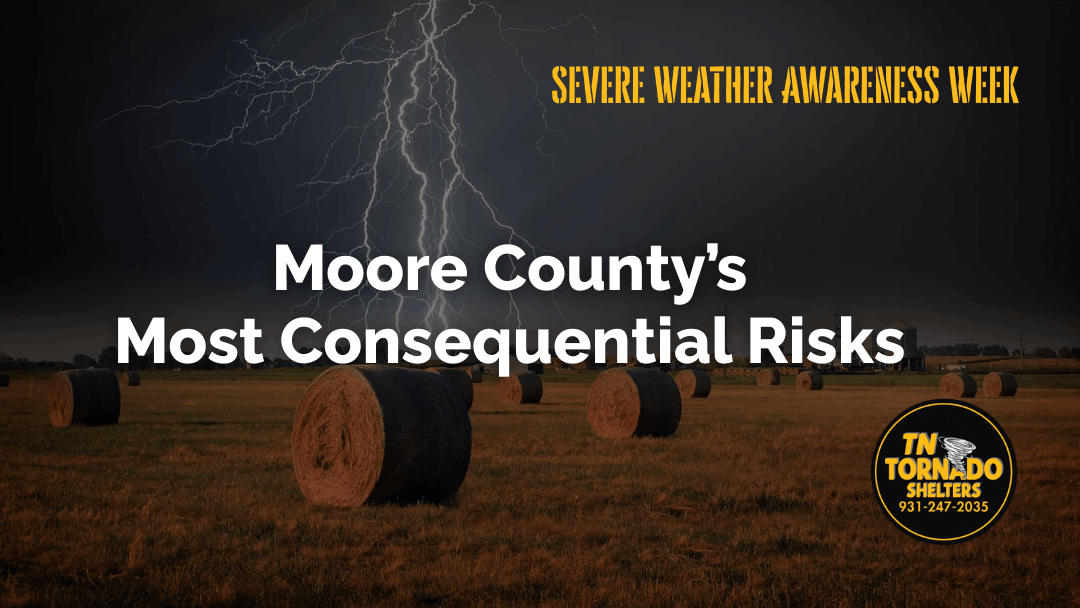
The three most consequential risks are tornadoes, flash flooding, and damaging thunderstorms/lightning – each with distinct hazards and seasonal patterns.
Tornadoes
Why it matters:
• Tennessee averages about 30 tornadoes per year, though totals fluctuate widely with seasonal and climate patterns. Some quieter years produce fewer than 20 tornadoes, while highly active years—such as 2011 (106 tornadoes) and 2021 (66 tornadoes) – demonstrate the state’s potential for extreme outbreaks.
• For Moore County, there have been 13 recorded tornadoes. April is the peak month with five recorded events (38.5%). The most active year was 2011 (three tornadoes), with two coming on April 27.
• The state experiences two peak seasons: a primary window from March through May and a secondary, less active period from October through December. April is typically the busiest month, with many tornadoes occurring in the late afternoon around 5 p.m.
• Middle and West Tennessee are especially at risk because flat land makes it easier for tornadoes to form. This puts southern Middle Tennessee in a higher-risk area.
• Tennessee has more nighttime tornadoes than any other state. Many storms hit after dark, when people are sleeping, and it is hard to see what is happening.
• Rural areas, with many manufactured homes and few strong shelters, are even more at risk during fast-moving storms at night.
Primary impacts
Structural destruction, debris-related injuries, prolonged power outages, and blocked rural roadways that can delay emergency response and recovery.
Flash Flooding
Why it matters:
• Slow-moving storms can bring several inches of rain in a few hours, flooding creeks, drains, and low-water crossings. This is a leading cause of weather-related deaths here, often when cars try to cross flooded roads.
• In Moore County, hazard mitigation planning identifies the Elk River and East Fork Mulberry Creek as the waterways most prone to flooding, along with smaller tributaries that frequently impact local roads and agricultural land.
• The Elk River and Tims Ford Lake are especially risky for low-lying places like Fairview Campground. Water levels can change by about 15 feet each year, and heavy rain increases the risk of flooding.
• Flood warnings in southern Middle Tennessee commonly extend to areas near Beans Creek, Woods Reservoir, and low-lying sections around Lynchburg, reflecting the region’s interconnected watershed.
• Areas with sinkholes and underground drainage can flood quickly and without much warning. Heavy rain can close roads and threaten homes, especially along Highways 50 and 55.
• Risk is greatest during prolonged, heavy rainfall episodes, when emergency officials frequently issue “Turn Around, Don’t Drown” warnings to prevent vehicle-related fatalities.
Primary impacts
Washed-out or impassable roads, stranded motorists, crop and livestock losses, contaminated wells, and property damage concentrated in low-lying or poorly drained areas.
Thunderstorms and Lightning
Why it matters:
• Severe thunderstorms frequently produce straight-line winds over 60 mph, large hail, and frequent cloud-to-ground (CG) lightning, making them the most common severe-weather threat in southern Middle Tennessee.
• Cloud-to-ground lightning is a strong electrical strike between a storm cloud and the ground. It starts when negative charges move downward from the cloud, and positive charges move upward from the ground. When they meet, a bright flash shoots back up to the cloud at nearly 60,000 miles per second. Sometimes, the flash flickers as several strokes follow the same path.
• Most cloud-to-ground lightning is negative, but the less common positive strikes come from higher in the storm and are much stronger. They can strike miles from the storm and cause greater damage. Sometimes, lightning can travel over 20 miles from the main storm.
• Since cloud-to-ground lightning hits the ground directly, it causes most of the damage to buildings, power lines, trees, and open land. This is a significant concern in rural, wooded areas, where falling branches and fires can exacerbate storm damage.
Primary impacts
Extended power outages, structural and roof damage from wind and hail, wildfire starts or equipment damage from lightning strikes, and dangerous outdoor exposure for farm, construction, and recreation activities.
Community Partners