Choosing Moore County means choosing change
#Opinion • 6:45 p.m. Feb. 17, 2026

Anaerobic digester, solar panels, tiny homes, and apartments – oh my!
Let’s start with a simple truth: We choose to live in Moore County. And increasingly, businesses are choosing Moore County.
Cumberland Springs Land Company put a price tag on more than 1,500 acres. Silicon Ranch stroked a check to buy it. Now a solar farm is rising along Highway 55 – visible, imperfect, and, to some, unwelcome. Yes, construction has been messy. Yes, Hurricane Creek must be protected. Yes, the company behind it isn’t “from around here.”
But Silicon Ranch isn’t the villain in this story.
If we’re being honest, the people who are from around here helped bring us to this moment.
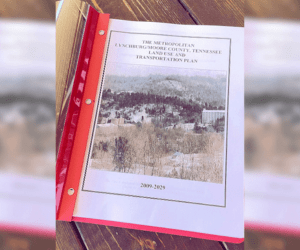
For more than a decade, Moore County has had a blueprint – the Land Use and Transportation Plan adopted Jan. 5, 2010. Elected leaders in 2010, 2014, 2018, and 2022 all had access to it. The vision was there. The guidance was there. The follow-through wasn’t.
So when a company finally makes a clear, lawful business decision, we act shocked. Outraged. Defensive. As if something has been done to us instead of something happening because of us.
We’ve long prided ourselves on a simple philosophy: Moore County won’t tell you what to do with your property. No building codes. No enforcement. Minimal interference.
That mindset comes with consequences.
✔ Tiny homes? A local wanted that property for a project of his own. But someone from the outside acted first.
✔ Apartments? Not one, but two locals had similar plans for that land. Again, someone from the outside moved first.
✔ The solar farm? Another investment opportunity – and once more, the first decisive step came from outside Moore County.
✔ The digester? That one didn’t even arrive unexpectedly. It was approved in plain sight by the very officials elected to guide this county’s future.
So the hard question isn’t why these projects are here. The harder question is this: Why are we blaming others for doing what we failed to do ourselves?
Lately, we’ve shifted into protection mode – adopting new ordinances, revising existing ones, discussing moratoriums, trying to shield Moore County from the next unwanted surprise. Some of those steps are wise. Some are overdue.
But defense is not a vision. And prevention is not progress. We cannot regulate our way into prosperity while refusing to define the future we’re actually trying to build.
Many residents want lower property taxes. That’s understandable. But lower taxes require one of two things: less spending or more revenue.
Are we spending too much on EMS? Law enforcement? Fire protection? Schools? Services for seniors? If anything, the opposite is true. Public safety, education, and care for an aging population are not luxuries. They are the foundation of a functioning community. And Moore County is aging – nearly a quarter of our population is already 65 or older. And every day, we grow older.
Meanwhile, younger generations aren’t staying. Family farms are being sold. Land changes hands not out of greed, but out of reality. So the real choice before us isn’t growth versus no growth. That choice is already gone.
The real choice is managed growth versus accidental growth.
Managed growth means actively courting and working with responsible businesses instead of reacting against them. It means adding conveniences families need, so they don’t have to leave the county for everyday life. It means building a broader tax base that relieves pressure on homeowners rather than squeezing them harder each year.
Look around our region. Winchester. Fayetteville. Even Bell Buckle. None has Moore County’s global recognition. None has our tourism engine. Yet each has deliberately invested in community development, housing, services, and opportunity. They chose forward motion.
Here in Moore County, we often choose nostalgia instead. We guard what was, rather than shape what could be while guarding what was.
But consider this: The tiny homes, the apartments, the digester, the solar farm – what do they all share? Someone believed Moore County was worth investing in. Someone chose us.
The question now is whether we will choose ourselves.
Choosing Moore County’s future doesn’t mean reckless development. It doesn’t mean paving over heritage or sacrificing what makes this place special. It means clarity. It means planning. It means courage to move from reaction to intention.
Most of all, it means going on offense instead of forever playing prevent defense. Because standing still isn’t preserving Moore County. It’s surrendering our future to chance.
We chose to live here. Others are choosing to invest here.
It’s time we choose what comes next – and here's one path forward:
Building the Foundation for Growth
Moore County does not need rapid growth to ensure a strong economic future. Instead, it needs careful, infrastructure-focused development that brings together utilities, workforce, housing, and education into a clear plan to attract the right businesses.
In rural America, the communities that attract employers are not always the largest or fastest growing. They are the ones that can confidently answer three simple questions:
• Do you have reliable utilities, especially water?
• Can you provide a trained workforce within commuting distance?
• Is there a predictable path to open and operate without costly delays?
For Moore County, the good news is that we already have many of the key elements needed to attract businesses. The next step is to bring infrastructure improvements and local talent together into a clear, unified strategy.
Infrastructure is the Starting Point for Economic Growth
Any real discussion about economic development starts with utilities and capacity. While businesses may prefer the small-town lifestyle, they choose places with reliable infrastructure and room to grow.
Water capacity is the single most important upgrade. For Moore County, improving water production and long-term reliability is the most important step to attract new businesses.
A realistic 10-year roadmap would focus on three phases:
1. Stabilize the current system (Years 1-2)
The fastest way to increase usable water is often not to drill new wells but to reduce losses in the existing system. Rural utilities commonly lose 20-40% of treated water through leaks, aging meters, or pressure issues. We are already addressing what has ailed MUD in recent memory – leak detection and repair programs, plus meter replacement and pressure management.
Other targeted actions could include:
• Rehabilitation of existing lines and pumps
• Engineering and hydrogeologic studies to define sustainable supply
These improvements alone can provide as much water as a new source, without requiring major construction.
2. Expand groundwater and storage (Years 3-5)
Once the current system is stabilized, Moore County could pursue:
• A multi-well wellfield for redundancy and higher production
• Treatment upgrades to remove bottlenecks
• Additional water tanks for fire protection and peak demand
• Emergency interconnections with neighboring utilities for drought resilience
At this stage, the county begins to add new water capacity to support more housing and small- to mid-sized employers.
3. Secure long-term drought resilience (Years 6-10)
Serious business recruitment requires decades of certainty, not just short-term capacity. Long-range options include:
• Regional partnerships to purchase treated water
• Development of a surface-water intake or reservoir if growth demands it
• Land-use protections around recharge areas and watersheds
By the end of this phase, Moore County should be able to clearly state how much water is available today and how quickly capacity can grow.
Having this clear information makes Moore County much more competitive when businesses are choosing locations.
Workforce: Moore County’s Hidden Advantage
Utilities are the foundation, but people are what create real opportunities. Within roughly an hour’s drive of Lynchburg sits a diverse network of:
• Community and technical colleges are producing skilled trades, healthcare, and industrial technicians.
• Four-year universities graduating students in business, engineering technology, IT, media, and supply chain.
• Specialized liberal arts and environmental programs feeding tourism, hospitality, and sustainability sectors.
This regional education ecosystem means Moore County does not need to build a workforce from scratch. Instead, the county has the chance to attract and retain the talent already being trained nearby.
Matching Infrastructure and Talent to the Right Businesses
Not every industry is the right fit for Moore County’s size or available utilities. The best approach is to recruit employers that are the right size, usually those that create 25 to 75 jobs and have moderate infrastructure needs.
1. Light manufacturing and value-added production
These operations align closely with regional technical training and require manageable water and utility loads.
Examples include:
• Food and beverage co-packing or specialty bottling
• Cabinetry, millwork, or building-product fabrication
• Small equipment or component assembly
• Fleet maintenance and refurbishment facilities
These employers offer steady, middle-income jobs without placing undue strain on local infrastructure.
2. Logistics support rather than mega-warehousing
Moore County’s access to regional highways creates opportunities for freight support services, even if large distribution centers are not practical.
Viable targets:
• Trailer and refrigeration repair
• Small cross-dock or regional transfer hubs
• Fleet parking and secure drop yards
• Cold-chain micro-warehousing for food distribution
These businesses are in high demand, require little infrastructure, and are sustainable for the local area.
3. Professional services and remote-work back offices
One of the fastest-growing rural opportunities is the quiet expansion of:
• Insurance and healthcare administrative offices
• IT and cybersecurity support firms
• Accounting, finance, and business services
• Digital media and marketing studios
These employers place greater emphasis on broadband and quality of life than on heavy utilities, making them a good fit for Moore County.
4. Tourism, hospitality, and experiential retail
Lynchburg already draws visitors. Economic growth depends on getting visitors to stay longer and spend more during their visit.
Strategic additions could include:
• Boutique lodging and cabins
• Chef-driven dining or specialty food concepts
• Outdoor recreation services and guides
• Heritage crafts and local manufacturing retail
Tourism revenue is especially valuable because it represents money imported into the county.
5. Healthcare and senior services
Rural demographics point toward sustained demand for:
• Outpatient specialty clinics
• Rehabilitation and therapy centers
• Assisted living and memory care
• Telehealth and mobile diagnostics
These services provide stable jobs even during economic downturns and meet local needs.
Housing and Childcare: The Quiet Infrastructure of Growth
Even if utilities and a workforce are available, employers may hesitate if workers cannot find housing or childcare.
Targeted solutions include:
• Encouraging duplexes, cottages, and small workforce rentals
• Supporting childcare expansion through public-private partnerships
• Coordinating housing development alongside utility expansion
In rural economic development, these factors often determine whether a project succeeds or fails.
Practical Roadmap for the Next Decade
If Moore County brings together water investment, workforce access, and the right size of business recruitment, the next 10 years could realistically bring:
• 50-100% increase in reliable water capacity
• Infrastructure resilience during drought or system failure
• Steady residential growth supported by utilities
• Recruitment of multiple 25-75 job employers
• Expanded tourism and healthcare services
• Stronger retention of regional college graduates
This is not explosive growth. This is steady, sustainable progress that helps a rural community grow without becoming overwhelmed.
The Central Lesson
Successful rural communities rarely win by chasing the biggest project. They succeed by building confidence in key areas: utilities, the workforce, and long-term planning.
When a county can clearly say, “We have the water, the workers, and the will to grow at the right scale,” business investment follows.
For Moore County, the path forward is not theoretical. It is already visible in its infrastructure plans, regional colleges, and strategic location.
Now, the task is to bring these pieces together into a clear growth plan that changes the property tax equation.

Duane Cross
Duane is the publisher and editor of the Observer. Call him at (931) 307-8626 or email duane@mcobserver.news.