Utilities at center of Moore County’s Land Use Plan
7:30 p.m. Dec. 3, 2025

DUANE CROSS
MCO Publisher•Editor
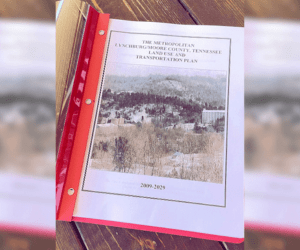
For more than 15 years, Moore County has had a comprehensive roadmap for growth and development. This plan was adopted after a public hearing at the Planning Commission’s Jan. 5, 2010, meeting, but it has rarely been discussed in public since then.
The Metropolitan Lynchburg/Moore County Land Use and Transportation Plan was created to guide land-use decisions from 2009 to 2029. County planners worked with the Tennessee Department of Economic and Community Development’s Local Planning Assistance Office to develop the plan. It covers topics like commercial growth, transportation, utilities, fiscal stability, and preserving the county’s rural character.
Now, the plan is receiving renewed attention.
At the Nov. 3 Planning and Zoning Commission meeting, Chairman Dexter Golden formally brought the document back to the commission. This started a process of local review and discussion, the first in several years.
The Observer has a copy of the full plan and is publishing a series of articles about its main sections and what they could mean for the county’s future. This report focuses on one key part of growth: utilities.
Utilities: The Backbone of Smart Growth
The plan opens its utility section with a blunt assessment:
“Land development without the extension of adequate utilities is costly to the general public. In order to achieve proper development and facilitate saving public funds, it is extremely important to coordinate the extension of utilities with the community's development plan.”
The plan says that if infrastructure like water, sewer, and electrical services expands without proper management, taxpayers may face extra costs. It can also lead to scattered growth that puts stress on public systems.
One of the plan’s highest priorities was the revitalization of Downtown Lynchburg within the Urban Services District. Planners identified a major advantage already in place: public utilities exist downtown and can support new commercial and residential development without costly extensions.
With this in mind, the plan set clear objectives and policies to guide how Moore County should expand or limit its utility infrastructure.
Goal A: Adequate and Efficient Utility Systems
The plan’s first objective is straightforward: provide adequate, efficient public utility facilities to meet both current and future development needs.
Among the key policies:
• Developers pay for utilities. All new public and private development should be equipped with adequate, properly installed utilities at the developer's expense. However, the plan allows public-private cost-sharing for “critical utilities” when community benefits and economic feasibility justify it.
• Sewer system expansion. The county should continue allocating funds to expand and upgrade its sewer network and actively seek additional customers to strengthen system viability.
• Water system capacity. Water distribution systems must be adequately sized to meet existing demands and future growth. This includes ensuring reliable access to potable, state-approved drinking water.
• Public health protection. The document stresses safeguarding residents through both clean water production and “safe and efficient collection and treatment of wastewater.”
• Proactive planning. By budgeting early, the county should plan for long-term capacity expansions to avoid infrastructure shortages as development increases.
These policies work together to support controlled growth, focusing on being prepared instead of reacting to problems as they arise.
Goal B: Standards for Utility Expansion
The plan also calls for clear standards and guidelines to decide when and where utilities should be extended.
Its recommendations emphasize focused development rather than scattered sprawl:
• Priority service to urbanizing areas. Utility extensions should occur first in designated growth zones and meet all health and safety standards.
• Water and sewer requirements. All new developments and redevelopments must include appropriately sized water and sewer lines in appropriate locations.
• Underground utilities encouraged. Where feasible, electrical lines should be buried to enhance reliability and preserve community aesthetics.
• Facility appearance. Structures for pumps, storage, and equipment should be landscaped or buffered to minimize their visual impact on surrounding areas.
• Fire protection standards. The water distribution system should be regularly evaluated to ensure adequate firefighting line pressure and a sufficient number of hydrants in all developed areas. Existing pressure deficiencies should be addressed promptly.
Potential structural changes are also included:
• Sewer outside the Urban Services District. The plan urges consideration of a Metro Charter amendment allowing public sewer coverage beyond the district’s current borders. It also supports cooperation with neighboring county utility systems to expand into the metropolitan area when practical.
• Rural alternatives. As an alternative to regional sewer expansion, the plan permits the use of approved “alternative sewer systems” for specific rural center locations, operated and maintained by external providers.
This mixed approach aims to protect Moore County’s rural areas while meeting health and development needs in certain growing areas.
Goal C: Protecting Fiscal Stability
The plan also considers the financial side of utilities, not just health and infrastructure. Expanding without a plan can put extra costs on taxpayers and make long-term budgeting harder.
To combat this, planners proposed a three-step fiscal strategy:
1. Develop a community facilities plan identifying all major infrastructure requirements.
2. Produce a public improvements program, prioritizing projects in five-year increments based on urgency, feasibility, and cost.
3. Establish a capital budget specifically designed to finance scheduled improvements — ensuring major infrastructure investments are coordinated and sustainable.
This organized approach is meant to protect the county’s finances by linking growth to long-term funding plans.
A Plan Rediscovered
Even though the Land Use and Transportation Plan is nearing the end of its 2009–2029 timeline, its policies remain important as Moore County continues to discuss zoning, commercial development, infrastructure limits, and community identity.
Chairman Golden’s decision to bring back the document shows that there is new local interest in the overall direction of growth, rather than making decisions one project at a time.
For both residents and policymakers, the utilities section presents the plan's central idea: growth should pay for itself. Developers are expected to cover infrastructure costs, and the county should plan expansions carefully, with clear strategies and transparency.
2009-2029 Land Use and Transportation Plan

Plan Puts Woodlands and Farmland First
In January 2010, Moore County leaders outlined strict protections for open space, steep slopes, and historic landscapes in a long-range growth plan.

Designed Growth: From Mulberry to Tims Ford
Moore County adopted a 2009–2029 land use plan that could reshape Lynchburg with greenways, new parks, and smarter growth rules. It’s not too late to use it …

The Road to Industry Runs Through Infrastructure
The Industrial section of the 2009-2029 Land Use Plan establishes a clear framework for how Moore County should grow its industrial sector.

The Plan: Revitalize downtown, shape growth
The focus on revitalizing Downtown Lynchburg – balancing historic preservation with smart commercial growth – was a tenet of the Land Use and Transportation Plan.

Moore County’s Forgotten Blueprint for Growth
Did you know there’s a 20-year land use and transportation plan guiding how our community develops, preserves farmland, and improves local roads?